Gaudí’s vision, still rising
Nature‑inspired geometry, radiant color, and a basilica in progress.
Table of Contents
Origins and Gaudí’s vision
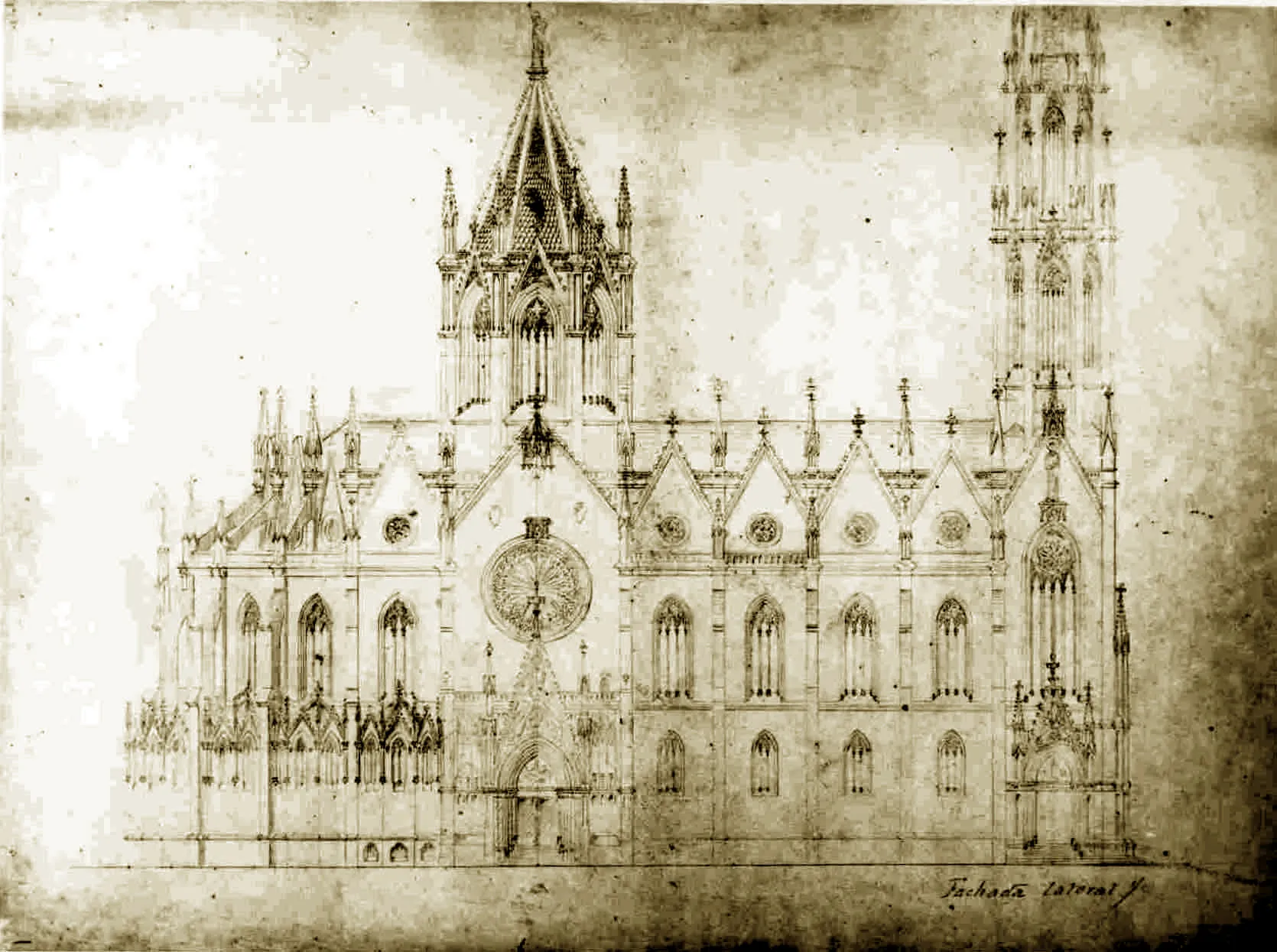
The project began in 1882 under a conventional Neo‑Gothic plan before Antoni Gaudí took over in 1883 and reimagined it as a radical, nature‑inspired basilica. He replaced pointed arches and heavy buttresses with a structural ‘ecosystem’ of branching columns, catenary curves, and ruled surfaces that could carry loads efficiently while expressing spiritual ideas through form.
Gaudí gradually moved his studio on site and devoted his final years entirely to the basilica. After his death in 1926, war and time damaged many plaster models; painstaking reconstructions from surviving fragments, photos, and notes now guide today’s architects, engineers, and artisans in continuing the work.
Design language and geometry
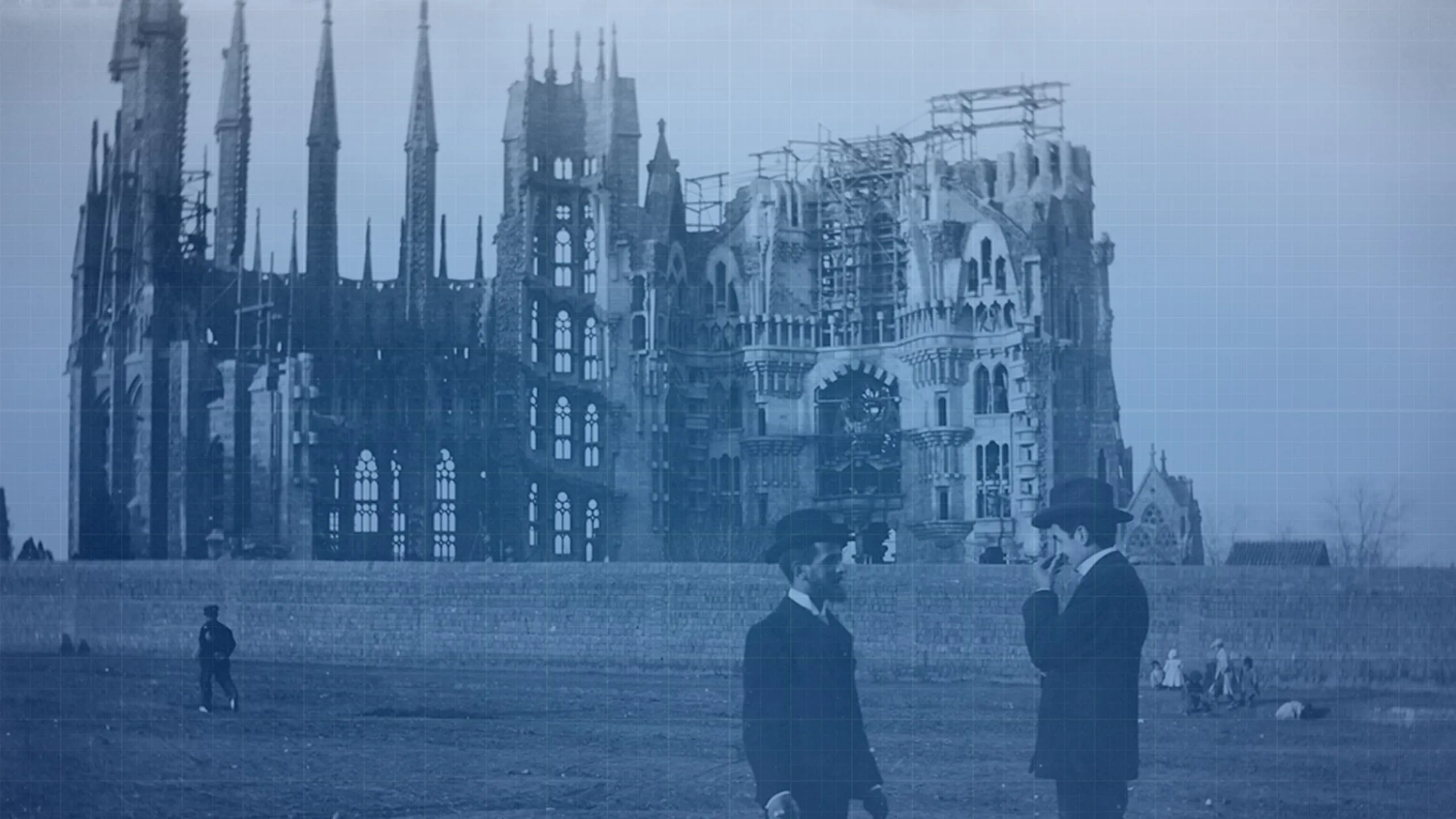
Gaudí’s geometry is both beautiful and structural: ruled surfaces (hyperboloids, paraboloids), helicoids, and catenary arches create shapes that can be built precisely and resist loads naturally. The famous tree‑like columns tilt and branch to align with forces, turning the nave into a forest where every ‘branch’ does real engineering work.
Light is treated as building material. Calibrated openings and stained‑glass gradients shift from warm to cool across the day, so color and intensity ‘compose’ the space as the sun moves, from gold mornings by the Nativity side to saturated evenings toward the Passion façade.
Symbolism across the façades
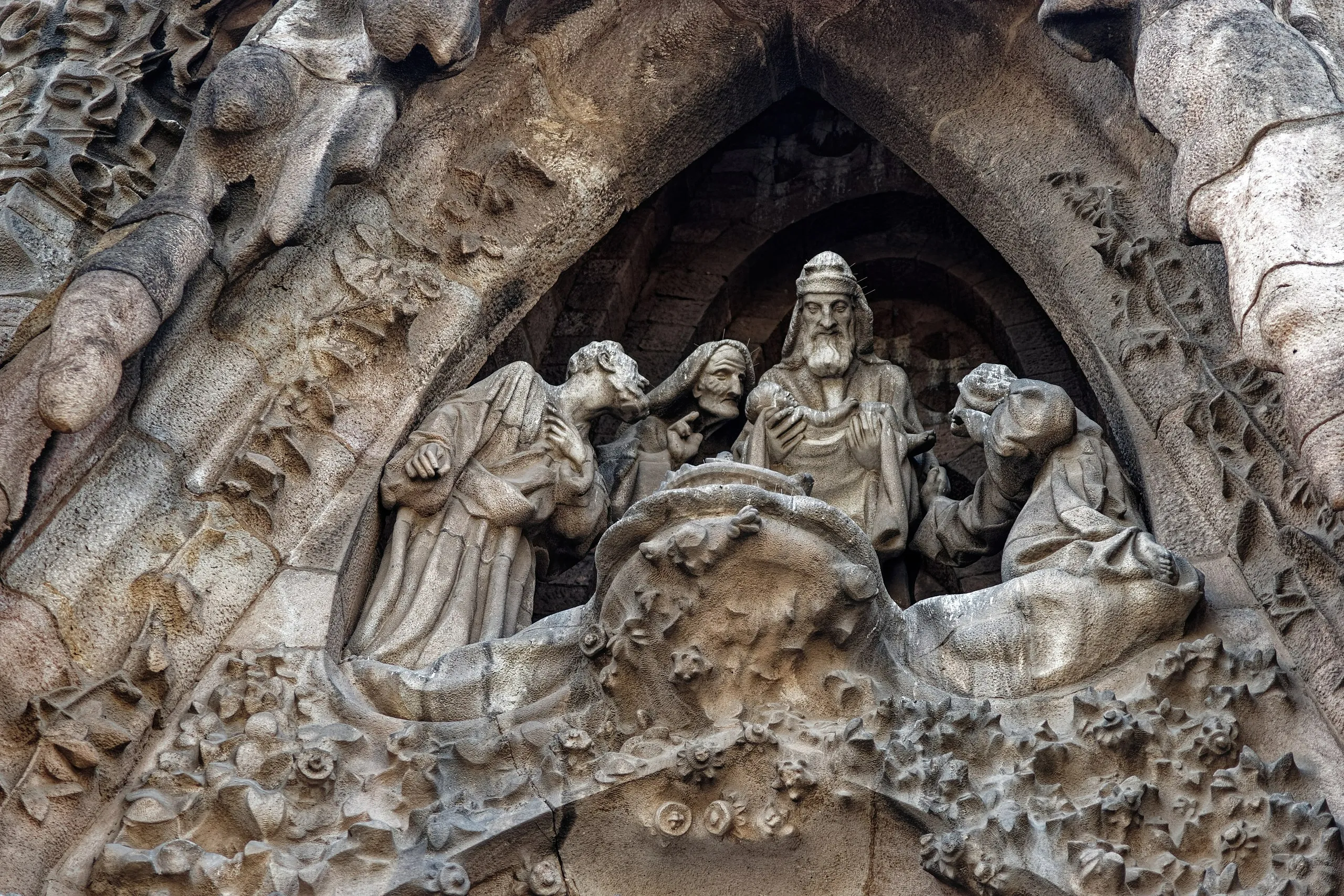
The Nativity façade, largely completed in Gaudí’s lifetime, overflows with flora, fauna, and joyful scenes that celebrate Creation — look for birds, reptiles, fruit, and the genealogies carved like living stone. Its organic style contrasts deliberately with the starkness across the transept.
The Passion façade, sculpted in the 20th century under Subirachs, reduces figures to tense, angular forms that speak of betrayal and sacrifice. The future Glory façade will form the great main entrance, addressing redemption and the path of the Christian life, completing the narrative cycle around the basilica.
Interior: columns, light, and sound
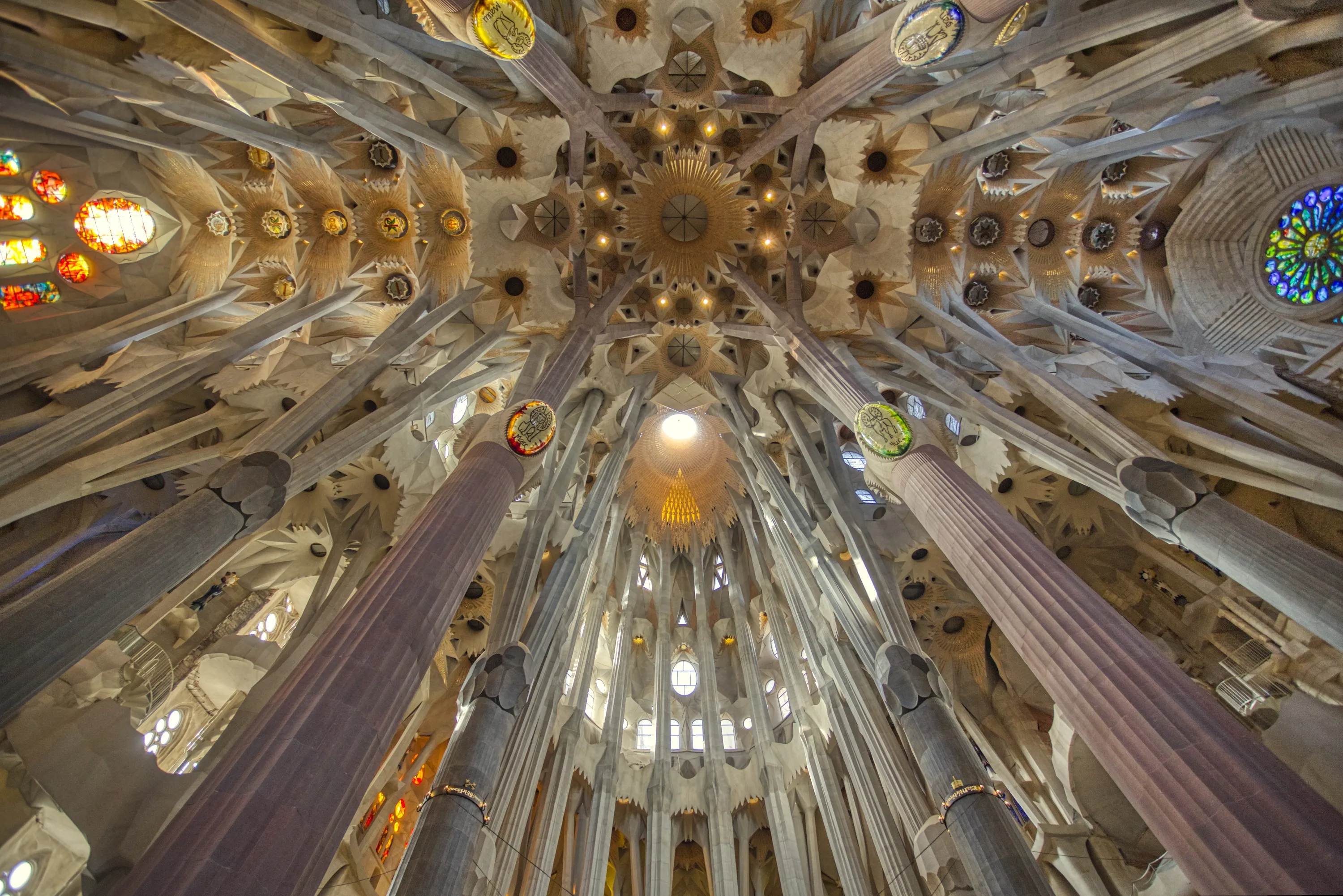
Inside, column ‘trunks’ change section and material as they rise, then branch into smooth ribs that merge with the vaults. The result is an uninterrupted canopy where structure, ornament, and symbolism are one — a forest whose leaves are light and whose roots are faith.
Acoustics are carefully tuned for both speech and sacred music. The nave’s reverberation supports chant and organ without muddiness, while side aisles and chapels offer quieter zones; during liturgy, the soundscape becomes part of the architecture.
Towers, structure, and views
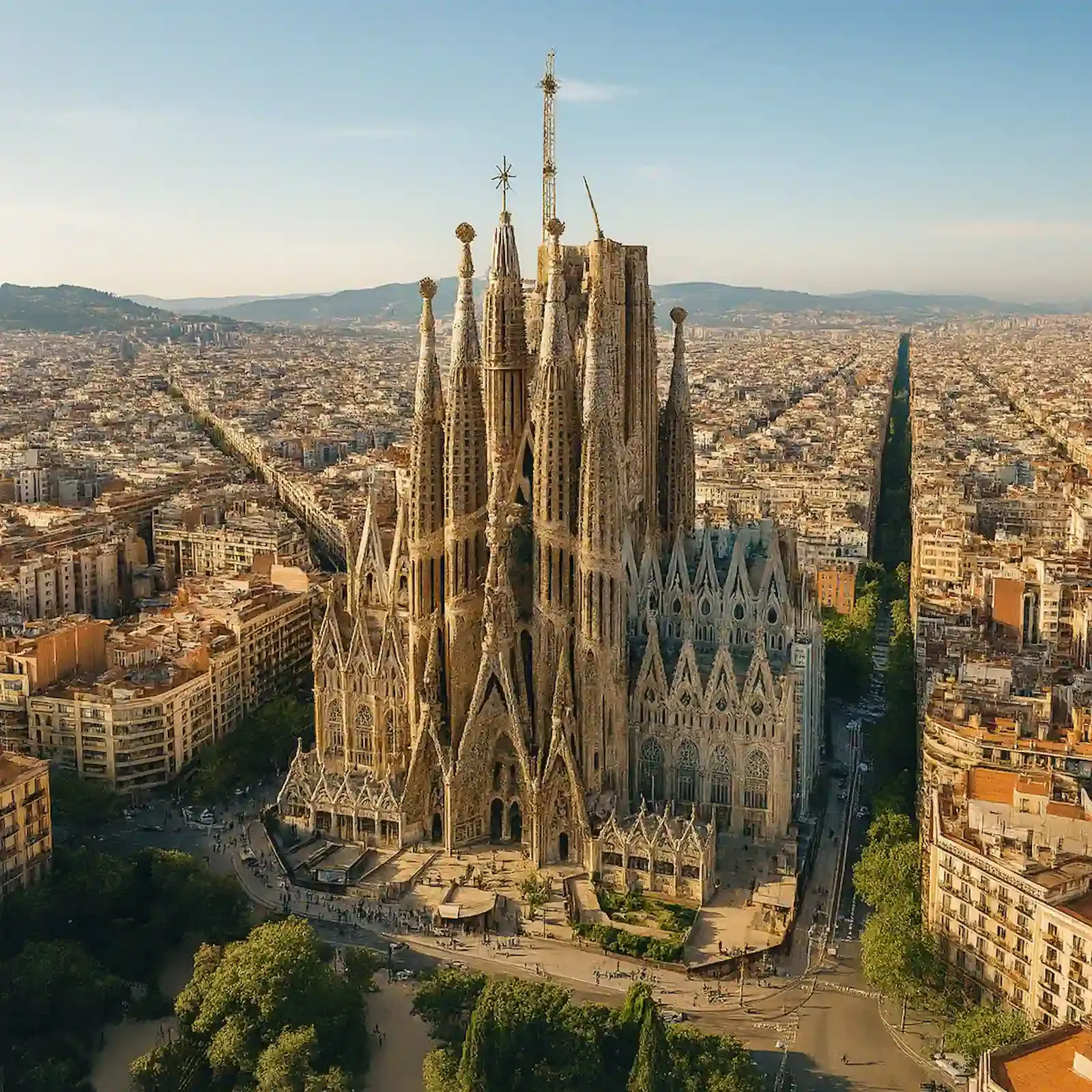
The ensemble of towers — Apostles, Evangelists, Mary, and the central tower of Christ — rises in a carefully stepped skyline. Openwork stone and ceramic ‘fruits’ crown the tops, reducing wind loads while turning the pinnacles into luminous beacons over the Eixample.
Visiting a tower combines engineering and spectacle: an elevator carries you up through the stone lattice, and a narrow staircase winds down past windows that frame the city. For safety, access may close in high winds or rain, and capacity is strictly limited.
The museum and school building
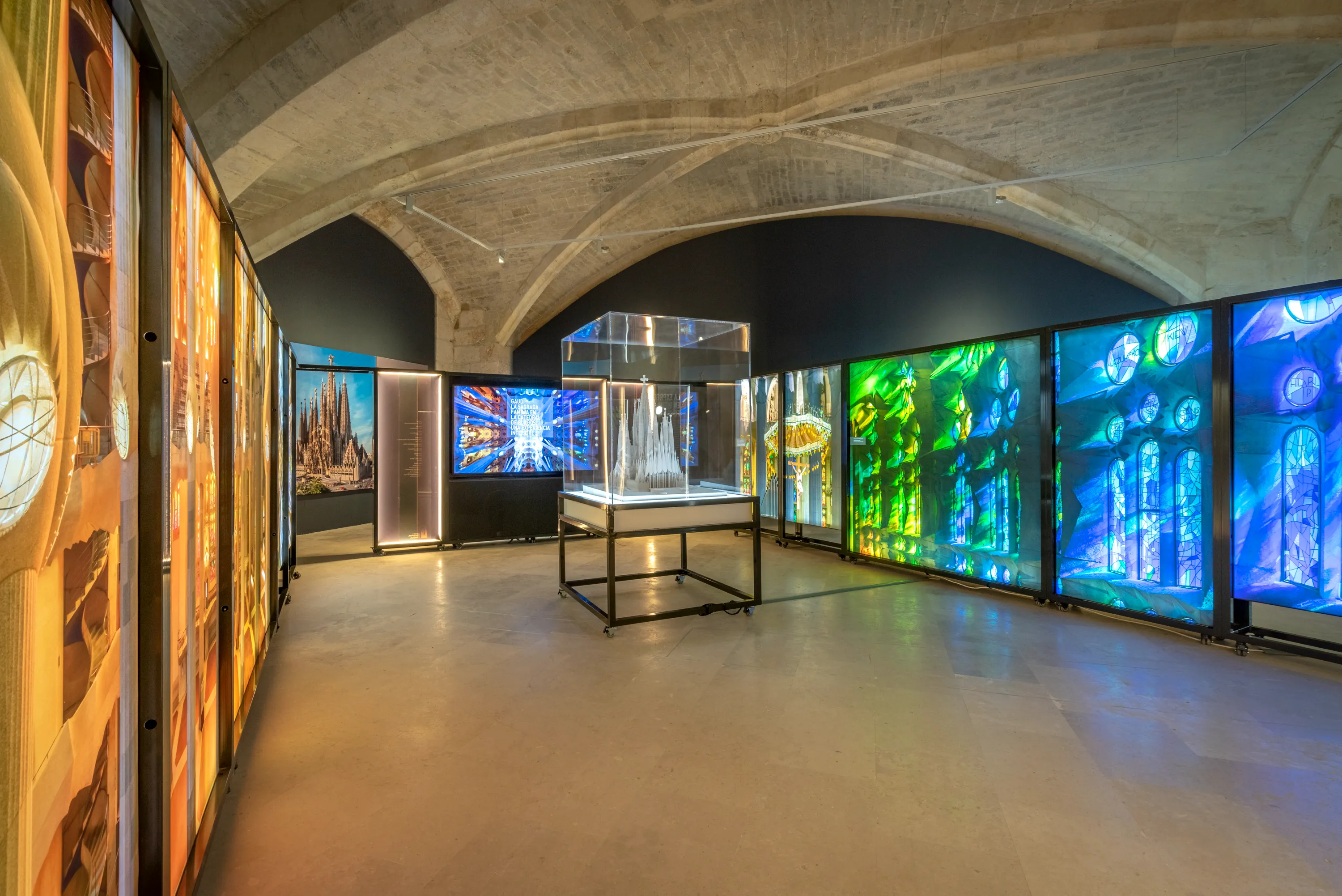
The on‑site museum reveals the working methods behind the poetry: plaster models restored from fragments, 1:10 mockups, stereophotography, and today’s digital fabrication. Exhibits show how traditional stone carving now cooperates with CNC cutting and 3D printing.
Next door, Gaudí’s modest School of the Sagrada Família — a simple, wavy‑roofed building for workers’ children — offers a human‑scale counterpoint to the basilica. Its recycled bricks and gentle forms embody Gaudí’s care for everyday life.
Construction timeline and techniques
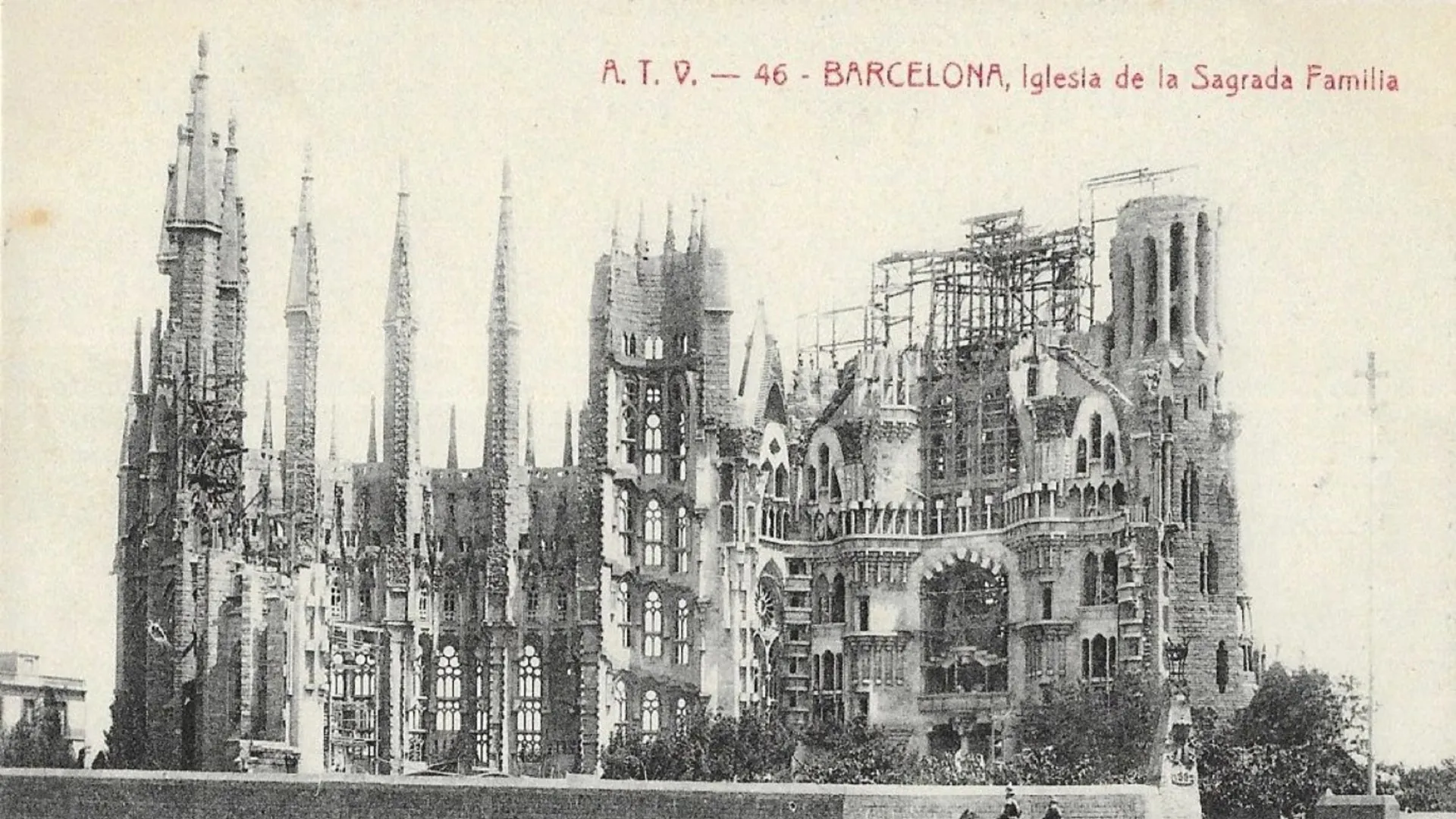
Construction has spanned artisanal stonework, reinforced concrete experiments, and today’s parametric design. Teams translate reconstructed plaster models into precise digital files, then fabricate full‑scale templates and stone blocks that fit like a puzzle on site.
The basilica is funded by visitors and donations rather than the state or church budgets. Timelines are projections rather than promises, reflecting the project’s complexity, ethical pace, and the choice to prioritize quality of craft over speed.
Liturgy, mass, and music
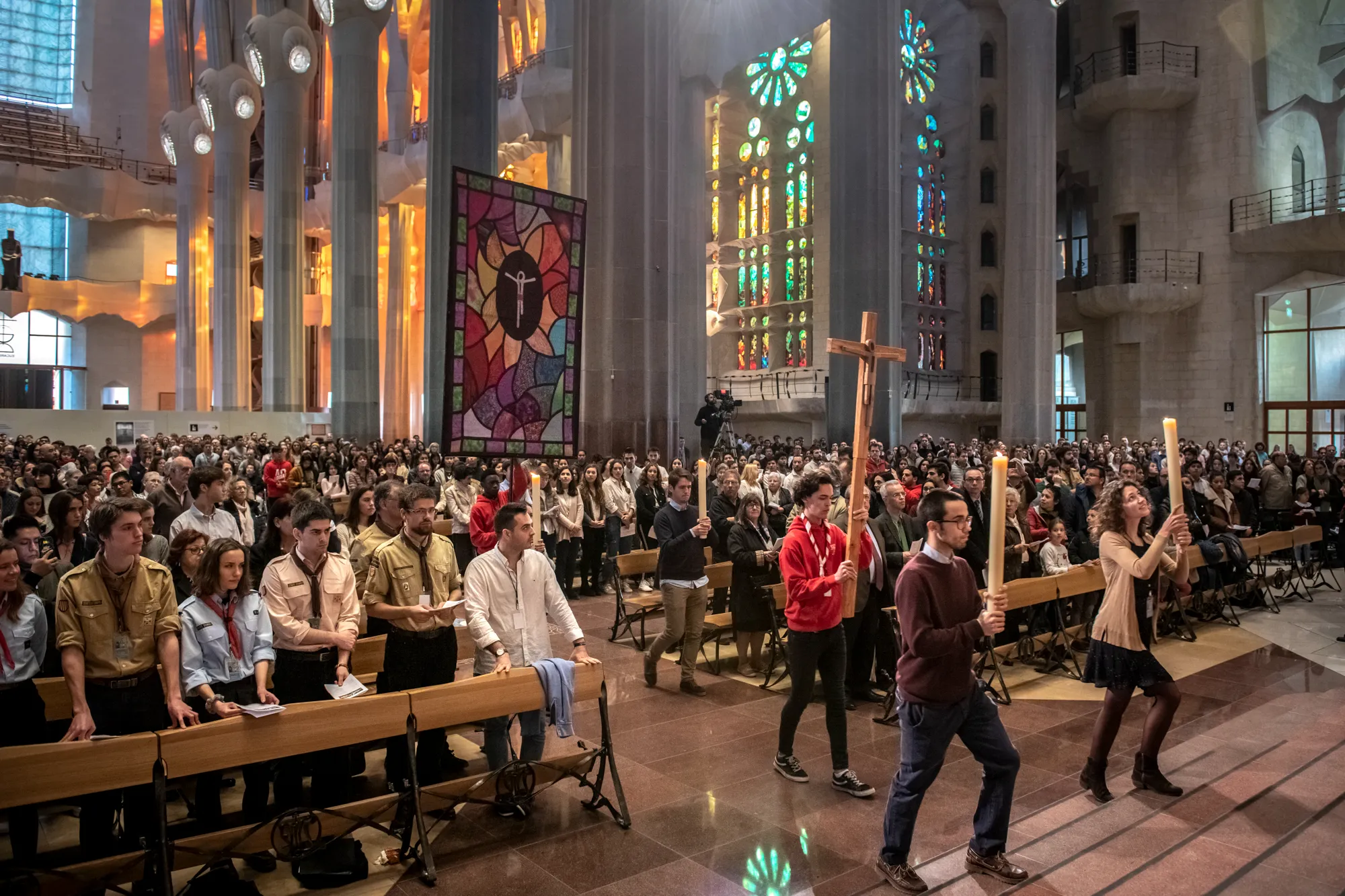
Beyond tourism, the Sagrada Família is a living place of worship with regular masses, special liturgies, and community events. Seating is limited and access procedures may differ from tourist visits, so always check official notices before attending.
Music is central to the atmosphere. The great organ and choir animate the nave in concerts and liturgical celebrations, and occasional recitals highlight the space’s unique acoustic character.
UNESCO status and legacy
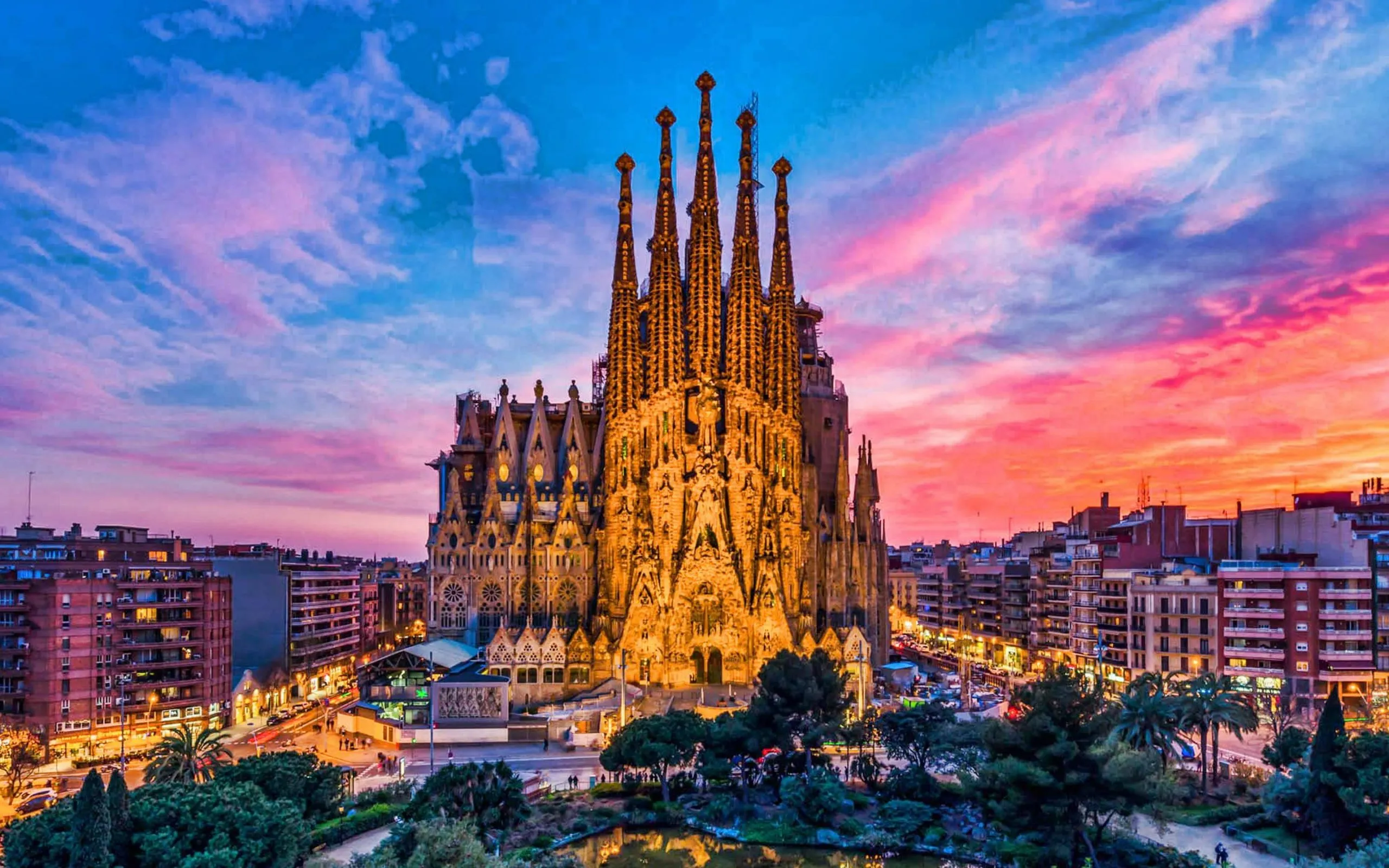
Several parts of the ensemble are inscribed as UNESCO World Heritage within the ‘Works of Antoni Gaudí’, recognizing its inventive structure, symbolic richness, and global influence on architecture.
Its legacy is not just visual: the project nurtures crafts, brings together architects and scientists, and keeps alive a dialogue between faith, nature, and technology that continues to inspire visitors and professionals worldwide.
Tickets, tours, and towers
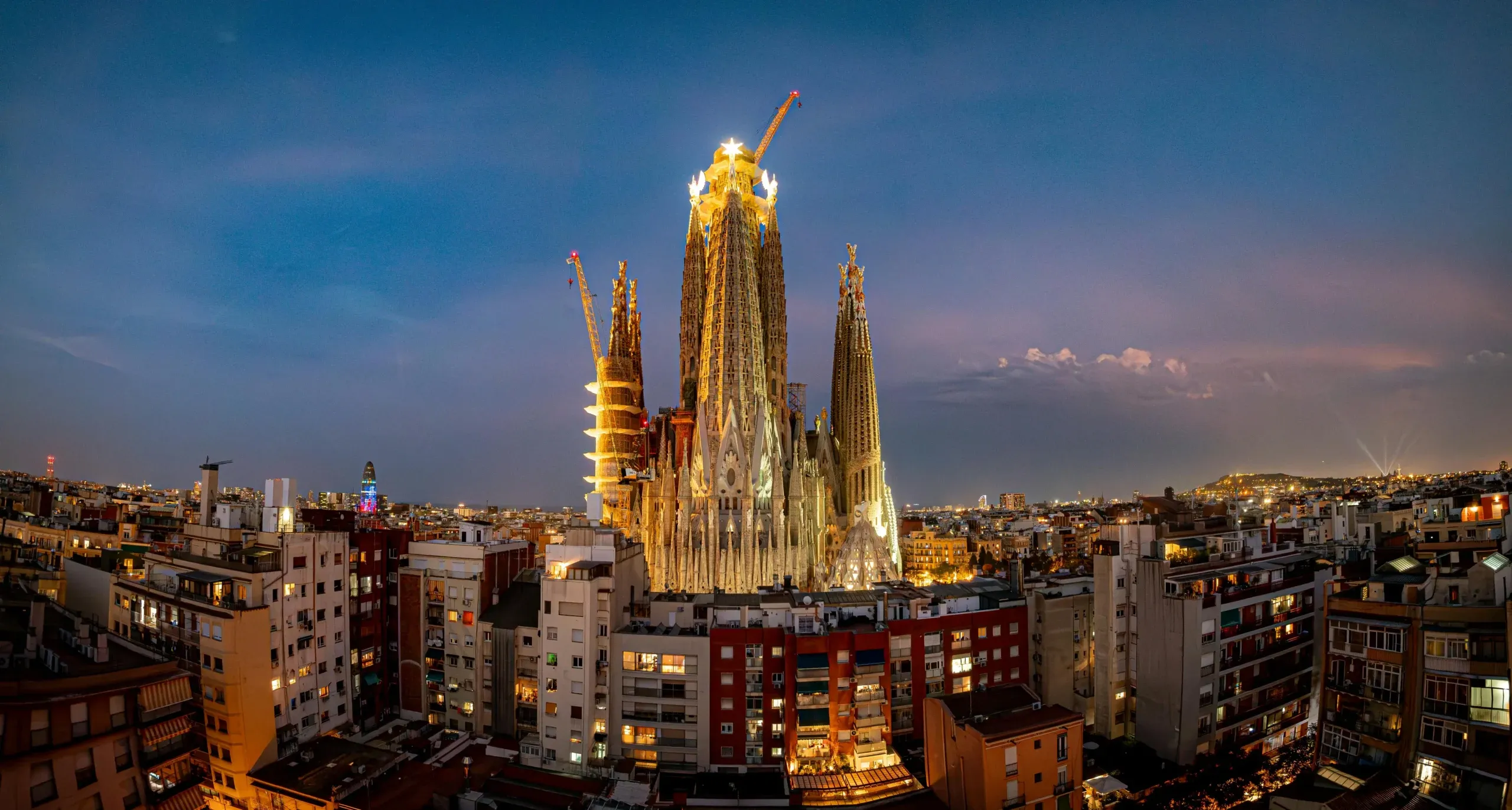
Entry options range from self‑guided visits with audio to themed guided tours and limited tower access. Tower slots are capacity‑controlled and can sell out days in advance in peak season.
Booking online secures your preferred time and lets you review flexibility, refund policies, and weather contingencies in advance — essential if you plan to include a tower.
Accessibility and safety
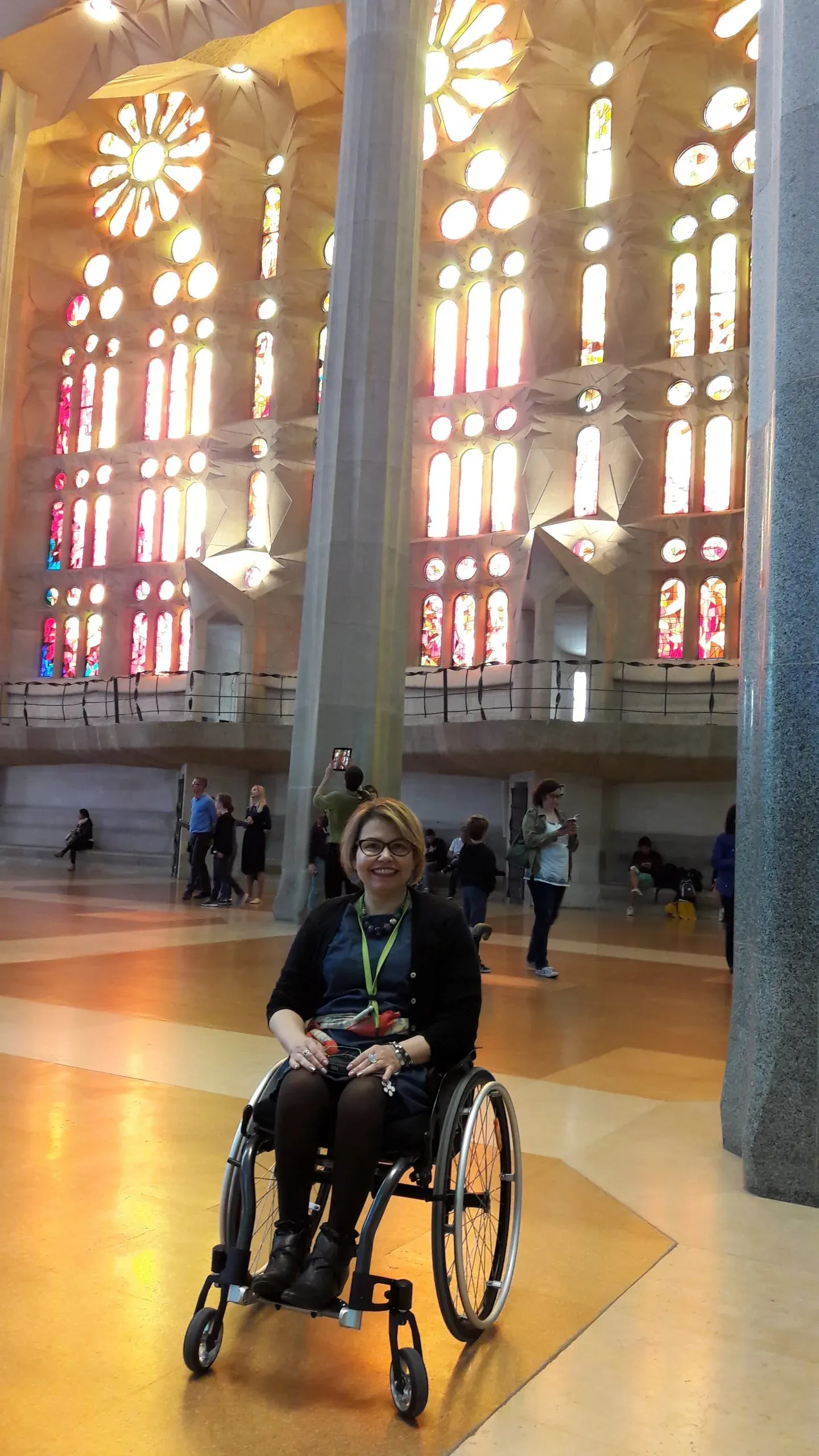
The basilica provides accessible routes, adapted facilities, and staff guidance; however, some areas can be busy and involve security checks, so allow extra time if you need assistance.
Tower visits include confined elevators and long, narrow staircases; they are unsuitable for wheelchairs, prams, or visitors with vertigo or certain health conditions. Always follow on‑site instructions.
Neighborhood and nearby sights
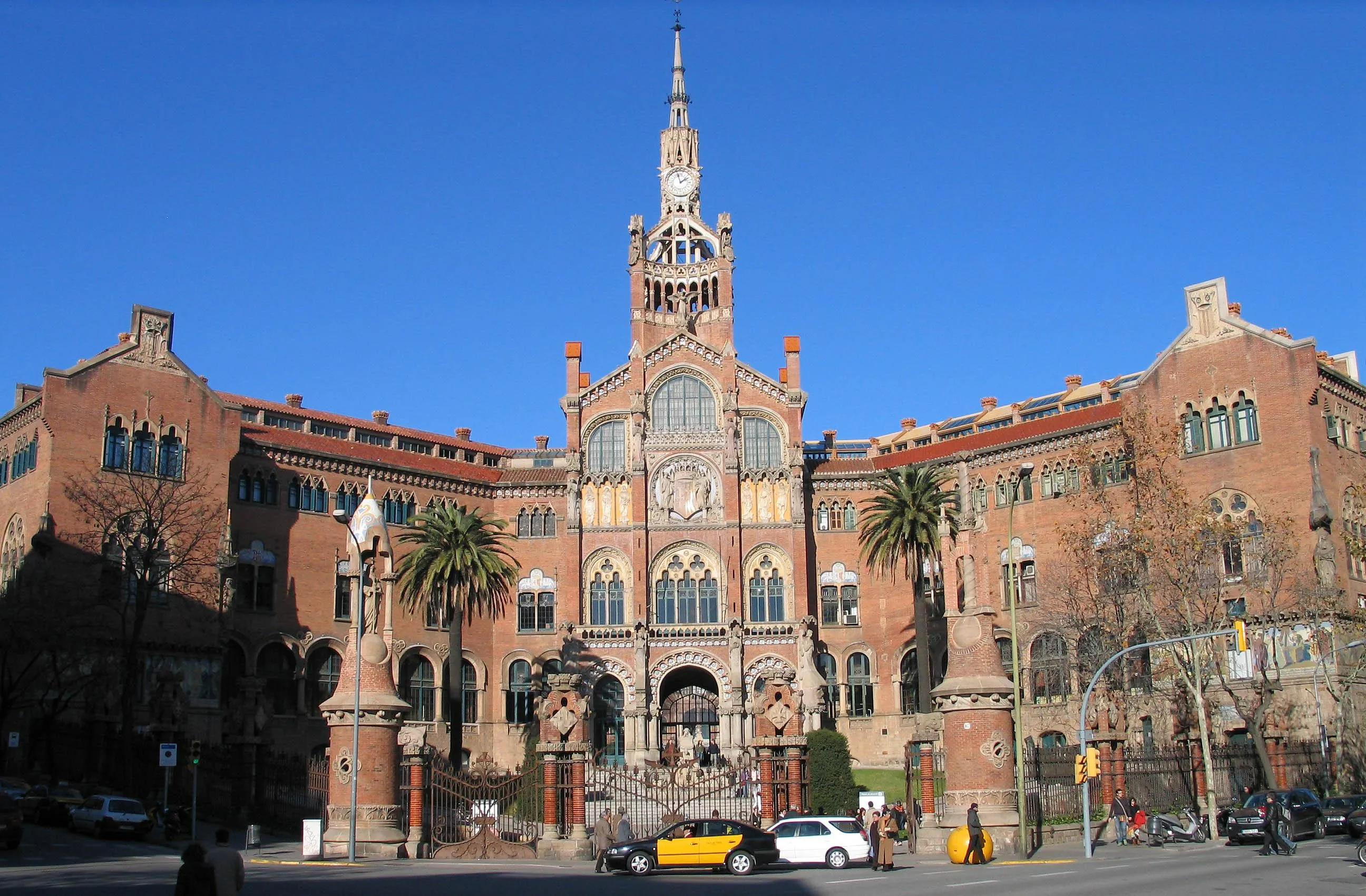
Make time for the nearby Sant Pau Art Nouveau Site, an extraordinary modernista hospital complex, or stroll down Passeig de Gràcia to see Casa Batlló and La Pedrera. The Eixample grid makes for relaxed, architectural walks.
Before or after your slot, pause at Plaça de Gaudí or Plaça de la Sagrada Família for classic postcard views. The surrounding streets are dotted with cafés, bakeries, and shaded benches.
Why the Sagrada Família matters
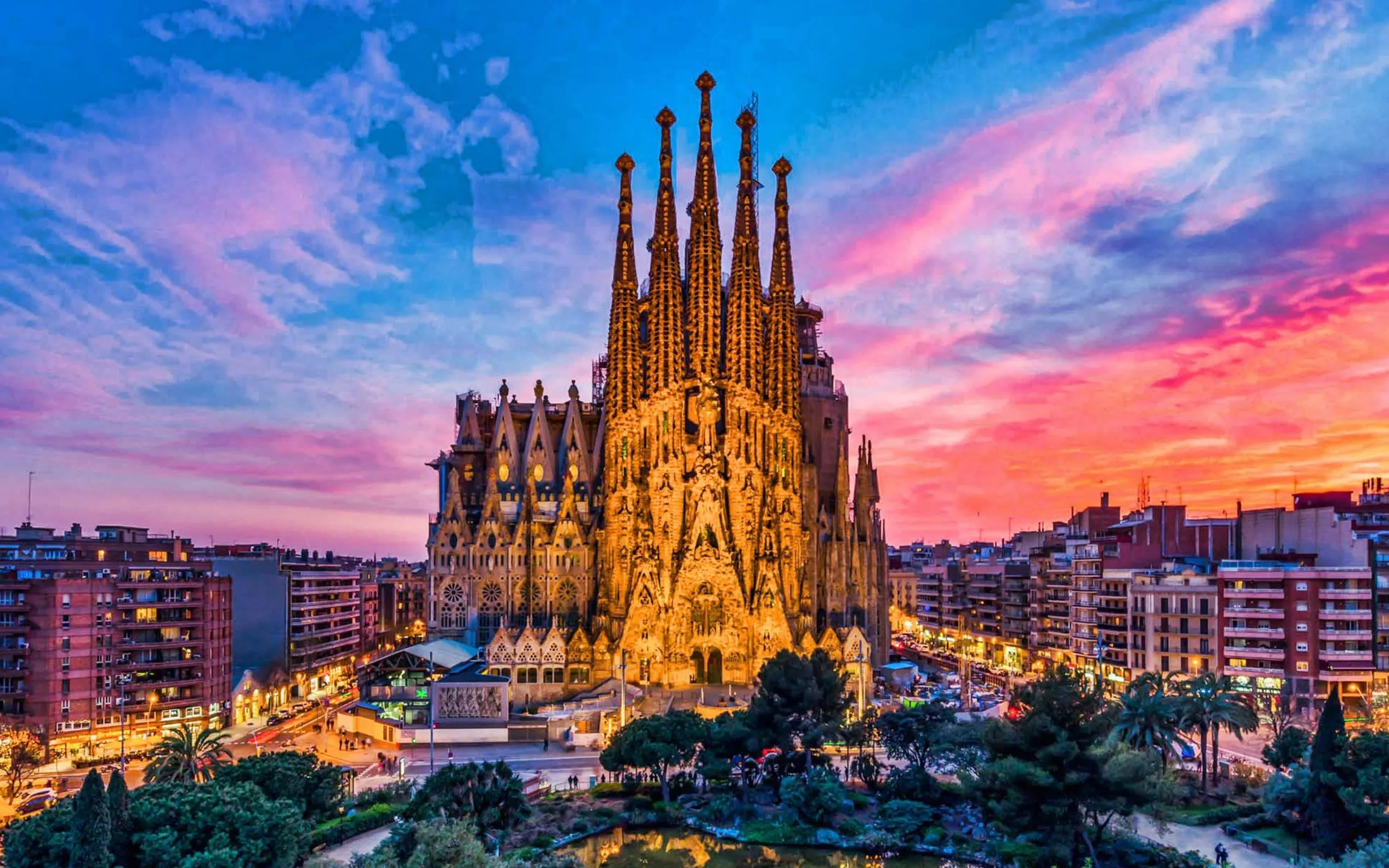
Few places integrate structure, symbolism, craft, and community as seamlessly as the Sagrada Família. It shows how architecture can be both technically advanced and spiritually resonant, rooted in nature yet looking forward.
Every ticket helps fund construction and conservation. Your visit supports the artisans, engineers, and steeple‑climbers who are carrying Gaudí’s vision toward completion for future generations.
Table of Contents
Origins and Gaudí’s vision
The project began in 1882 under a conventional Neo‑Gothic plan before Antoni Gaudí took over in 1883 and reimagined it as a radical, nature‑inspired basilica. He replaced pointed arches and heavy buttresses with a structural ‘ecosystem’ of branching columns, catenary curves, and ruled surfaces that could carry loads efficiently while expressing spiritual ideas through form.
Gaudí gradually moved his studio on site and devoted his final years entirely to the basilica. After his death in 1926, war and time damaged many plaster models; painstaking reconstructions from surviving fragments, photos, and notes now guide today’s architects, engineers, and artisans in continuing the work.
Design language and geometry
Gaudí’s geometry is both beautiful and structural: ruled surfaces (hyperboloids, paraboloids), helicoids, and catenary arches create shapes that can be built precisely and resist loads naturally. The famous tree‑like columns tilt and branch to align with forces, turning the nave into a forest where every ‘branch’ does real engineering work.
Light is treated as building material. Calibrated openings and stained‑glass gradients shift from warm to cool across the day, so color and intensity ‘compose’ the space as the sun moves, from gold mornings by the Nativity side to saturated evenings toward the Passion façade.
Symbolism across the façades
The Nativity façade, largely completed in Gaudí’s lifetime, overflows with flora, fauna, and joyful scenes that celebrate Creation — look for birds, reptiles, fruit, and the genealogies carved like living stone. Its organic style contrasts deliberately with the starkness across the transept.
The Passion façade, sculpted in the 20th century under Subirachs, reduces figures to tense, angular forms that speak of betrayal and sacrifice. The future Glory façade will form the great main entrance, addressing redemption and the path of the Christian life, completing the narrative cycle around the basilica.
Interior: columns, light, and sound
Inside, column ‘trunks’ change section and material as they rise, then branch into smooth ribs that merge with the vaults. The result is an uninterrupted canopy where structure, ornament, and symbolism are one — a forest whose leaves are light and whose roots are faith.
Acoustics are carefully tuned for both speech and sacred music. The nave’s reverberation supports chant and organ without muddiness, while side aisles and chapels offer quieter zones; during liturgy, the soundscape becomes part of the architecture.
Towers, structure, and views
The ensemble of towers — Apostles, Evangelists, Mary, and the central tower of Christ — rises in a carefully stepped skyline. Openwork stone and ceramic ‘fruits’ crown the tops, reducing wind loads while turning the pinnacles into luminous beacons over the Eixample.
Visiting a tower combines engineering and spectacle: an elevator carries you up through the stone lattice, and a narrow staircase winds down past windows that frame the city. For safety, access may close in high winds or rain, and capacity is strictly limited.
The museum and school building
The on‑site museum reveals the working methods behind the poetry: plaster models restored from fragments, 1:10 mockups, stereophotography, and today’s digital fabrication. Exhibits show how traditional stone carving now cooperates with CNC cutting and 3D printing.
Next door, Gaudí’s modest School of the Sagrada Família — a simple, wavy‑roofed building for workers’ children — offers a human‑scale counterpoint to the basilica. Its recycled bricks and gentle forms embody Gaudí’s care for everyday life.
Construction timeline and techniques
Construction has spanned artisanal stonework, reinforced concrete experiments, and today’s parametric design. Teams translate reconstructed plaster models into precise digital files, then fabricate full‑scale templates and stone blocks that fit like a puzzle on site.
The basilica is funded by visitors and donations rather than the state or church budgets. Timelines are projections rather than promises, reflecting the project’s complexity, ethical pace, and the choice to prioritize quality of craft over speed.
Liturgy, mass, and music
Beyond tourism, the Sagrada Família is a living place of worship with regular masses, special liturgies, and community events. Seating is limited and access procedures may differ from tourist visits, so always check official notices before attending.
Music is central to the atmosphere. The great organ and choir animate the nave in concerts and liturgical celebrations, and occasional recitals highlight the space’s unique acoustic character.
UNESCO status and legacy
Several parts of the ensemble are inscribed as UNESCO World Heritage within the ‘Works of Antoni Gaudí’, recognizing its inventive structure, symbolic richness, and global influence on architecture.
Its legacy is not just visual: the project nurtures crafts, brings together architects and scientists, and keeps alive a dialogue between faith, nature, and technology that continues to inspire visitors and professionals worldwide.
Tickets, tours, and towers
Entry options range from self‑guided visits with audio to themed guided tours and limited tower access. Tower slots are capacity‑controlled and can sell out days in advance in peak season.
Booking online secures your preferred time and lets you review flexibility, refund policies, and weather contingencies in advance — essential if you plan to include a tower.
Accessibility and safety
The basilica provides accessible routes, adapted facilities, and staff guidance; however, some areas can be busy and involve security checks, so allow extra time if you need assistance.
Tower visits include confined elevators and long, narrow staircases; they are unsuitable for wheelchairs, prams, or visitors with vertigo or certain health conditions. Always follow on‑site instructions.
Neighborhood and nearby sights
Make time for the nearby Sant Pau Art Nouveau Site, an extraordinary modernista hospital complex, or stroll down Passeig de Gràcia to see Casa Batlló and La Pedrera. The Eixample grid makes for relaxed, architectural walks.
Before or after your slot, pause at Plaça de Gaudí or Plaça de la Sagrada Família for classic postcard views. The surrounding streets are dotted with cafés, bakeries, and shaded benches.
Why the Sagrada Família matters
Few places integrate structure, symbolism, craft, and community as seamlessly as the Sagrada Família. It shows how architecture can be both technically advanced and spiritually resonant, rooted in nature yet looking forward.
Every ticket helps fund construction and conservation. Your visit supports the artisans, engineers, and steeple‑climbers who are carrying Gaudí’s vision toward completion for future generations.