Sagrada Família Interior Curiosities — What to Look For
From hyperboloid light wells to rotating columns and inscriptions in glass—discover the details that most visitors miss.
The nave rewards slow looking. Here are curiosities that reveal the building’s logic and poetry.
Rotating, branching columns
Columns change section as they rise (circular → polygonal), then branch. Their shallow flutes align with stress paths, so the ornament is structural logic.
Hyperboloid light wells
Look up to the vault nodes: those perforated cones are hyperboloids that pull in light while diffusing glare—hence the soft, luminous canopy.
Color that moves
The stained glass isn’t static decoration; it’s a time instrument. Sit for five minutes and watch color bands slide across the columns as the sun shifts.
Materials as a map of forces
Harder stones (like basalt or granite) appear where loads concentrate; lighter materials appear higher. Your eye is reading engineering in stone.
Inscriptions and symbols
Names of saints, places, and invocations appear on glass and stone. They’re not random: inscriptions orient prayer and tie the interior to the wider Church.
Acoustics by geometry
Curved surfaces and perforations scatter sound, making the space intelligible for spoken word and choral music without obvious tech.
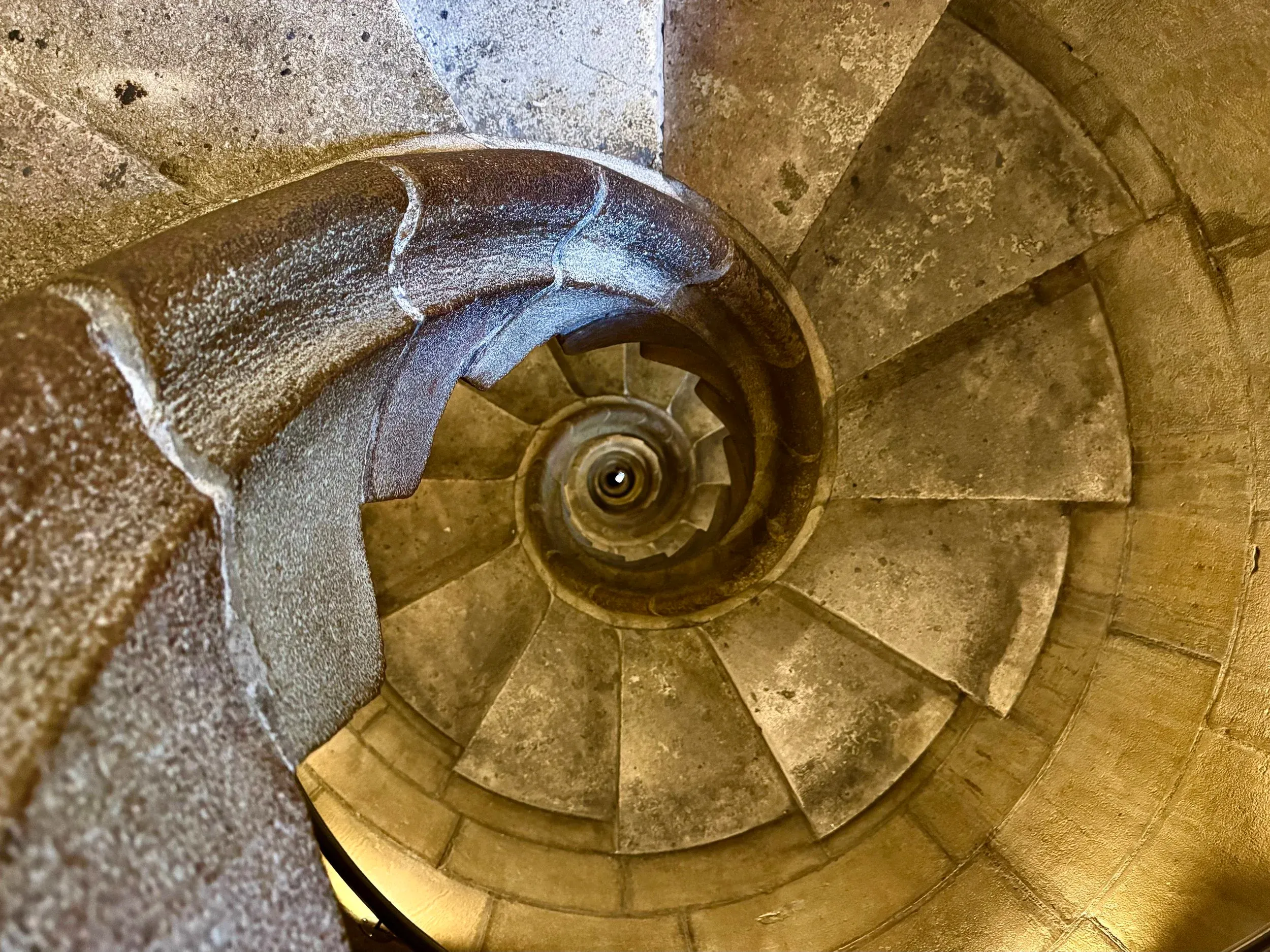
Spiral stairs and vortices
Where you glimpse the towers’ stairs, notice spiral geometries echoing shells and plants—Gaudí’s nature study turns into structure.
How to explore in 20 minutes
- Stand under the crossing; look up to locate light wells.
- Walk an aisle slowly; track a single color as it moves.
- Find one column and sketch its changing section with your eye.
- Pause to listen—note how voices hang then fade.
About the Author

Architecture Guide
I created this guide to make your Sagrada Família visit simple, insightful, and stress‑free.
Tags
Comments (0)
Loading comments...