Visiting timetable09:00 AM – 08:00 PM
|Sunday, September 20, 2026C/ de Mallorca, 401, 08013 Barcelona, Spain
Back to music
organ
Sagrada Família Organ — Acoustics and Listening Guide
Discover how the Sagrada Família’s organ interacts with stone, light, and space—what to listen for and when to go.
11/3/2025
13 min read
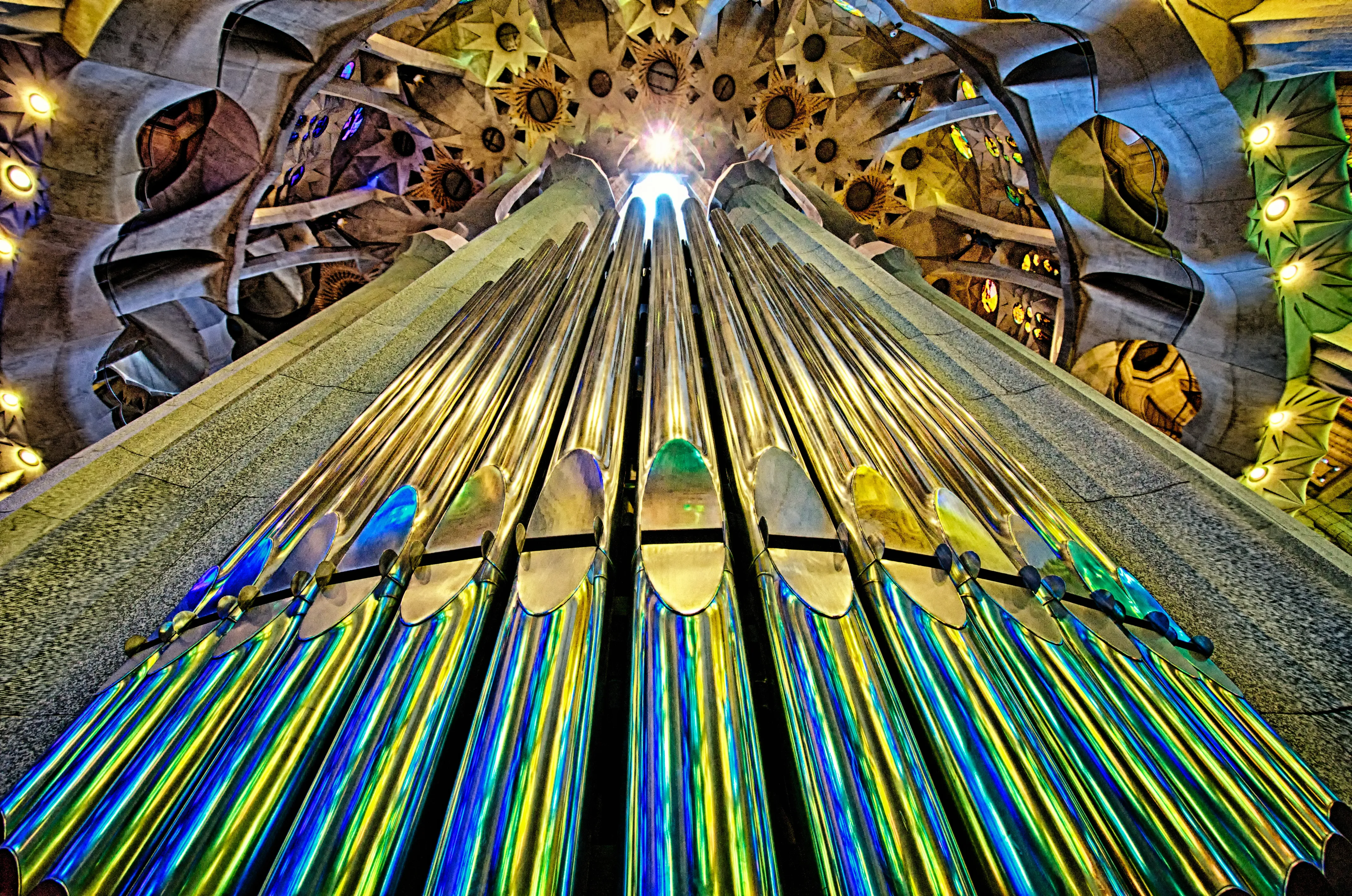
The Sagrada Família’s organ doesn’t just fill a room—it animates a forest of stone. Architecture and instrument are conceived together so that sound rises, blends, and returns with clarity.
Sound shaped by geometry
- Curved vaults and perforations scatter resonance, keeping tone present but not harsh.
- Columns act like natural diffusers; the room sustains long lines without muddling fast passages.
- The result is a vocal organ sound—ideal for chant, hymnody, and layered polyphony.
Placement and projection
- The organ’s pipes and casework are positioned to project toward the crossing and along the nave.
- Visual integration keeps the focus on liturgy while ensuring the instrument speaks evenly to congregation and choir.
What to listen for
- Soft foundations under prayer; gentle flutes that seem to glow with morning glass.
- Brilliant but controlled reeds and mixtures on high feasts, carrying melody across the forest of columns.
- How harmony seems to move with the light—cool mornings read serene, warm evenings feel exultant.
Organ and liturgy
- On Sundays and solemnities, the organ supports congregational song, alternates with choir, and offers short elevations and postludes.
- During Lent and Good Friday, registration is restrained; at the Easter Vigil, expect a blaze after the Exsultet.
Repertoire and style (typical)
- Chant‑based preludes, Baroque and Classical works suited to clear acoustics, Romantic color for solemn feasts, and contemporary pieces that explore the room’s unique response.
Best moments to hear it
- Before and after major Masses (arrive early, linger briefly).
- Special concerts and liturgical celebrations (see the official calendar).
- Quiet weekday Masses where the organ’s soft registrations reveal the room.
Practical notes
- Recording policies vary; always check signage and staff guidance.
- Choose a seat mid‑nave for balanced sound; move nearer the crossing for detail.
- For photographs, keep it discreet and never during the most sacred moments of the liturgy.
When stone, light, and instrument work as one, you don’t just hear music—you see it.
About the Author

Music Writer
I created this guide to make your Sagrada Família visit simple, insightful, and stress‑free.
Tags
Organ
Music
Acoustics
Liturgy
Architecture
Comments (0)
Leave a Comment
Loading comments...