Sagrada Família Interior Works — Altar, Canopy, Organ, Glass
Meet the basilica’s interior works: the altar under a vine‑like canopy, the ambo for the Word, the organ shaping sound, and the glass orchestrating light.
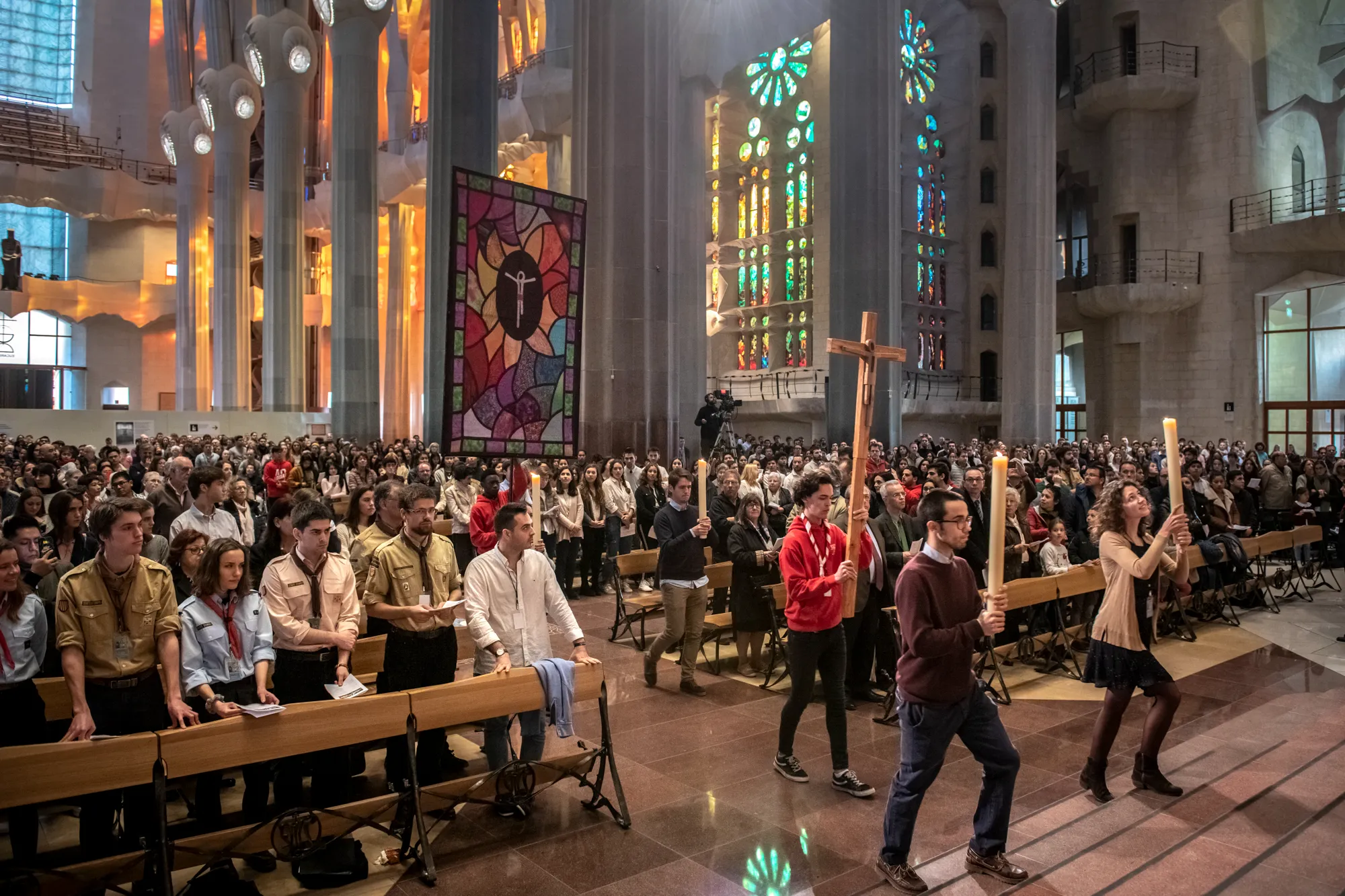
The Sagrada Família is a liturgical instrument as much as architecture. These are the interior works that shape prayer, movement, and meaning.
The altar and suspended canopy
At the heart of the crossing sits the stone altar, simple and grounded, beneath a suspended canopy often read as a vine or grape cluster—an image of Eucharist (bread and wine, wheat and grapes). A crucifix hangs above, drawing the vertical axis from nave floor to vault.
What to look for
- The altar’s unobtrusive massing keeps focus on action and Word.
- The canopy’s warmth balances the coolness of stone and glass below.
The ambo (pulpit for the Word)
Opposite the altar area you’ll find the ambo, where readings are proclaimed. Its placement and clarity underscore the two tables of the liturgy: the Word and the Eucharist.
How to read it
- Look for motifs of fish, wheat, or book forms—symbols of teaching and nourishment.
- The ambo’s geometry projects voice; nearby surfaces soften echoes.
The choir and organ
Pipes and casework are integrated so the organ supports both chant and large assemblies. Geometry and materials extend sound without harshness.
Listen for
- A gentle swell under the vaults; color from glass subtly affects how you perceive the tone.
- Choir placement uses height to blend voices rather than isolate them.
Stained glass as a narrative field
Artist Joan Vila‑Grau’s glass turns theology into color gradients—cool creation tones in the east, warm sacrifice tones in the west. Names and invocations embed prayer into the light itself.
Try this
- Read a single window from bottom to top; note how color intensifies.
- Sit as the sun shifts and watch how the altar zone transforms.
Seating, circulation, and thresholds
Even the benches and railings trace processional routes. Low boundaries signal thresholds without shutting space; the nave remains a generous, moving room.
Why it matters
Together, these works make the basilica legible: Word heard, Sacrament seen, song carried, light teaching quietly. They’re not decoration—they’re the operas (works) that let the place do what it’s made to do.
About the Author

Liturgical Arts Writer
I created this guide to make your Sagrada Família visit simple, insightful, and stress‑free.
Tags
Comments (0)
Loading comments...