Sagrada Família Fruit Baskets — Meaning and Where to See Them
A guide to the Sagrada Família’s iconic fruit‑crowned pinnacles: what they mean, how they were made, and the best viewpoints.
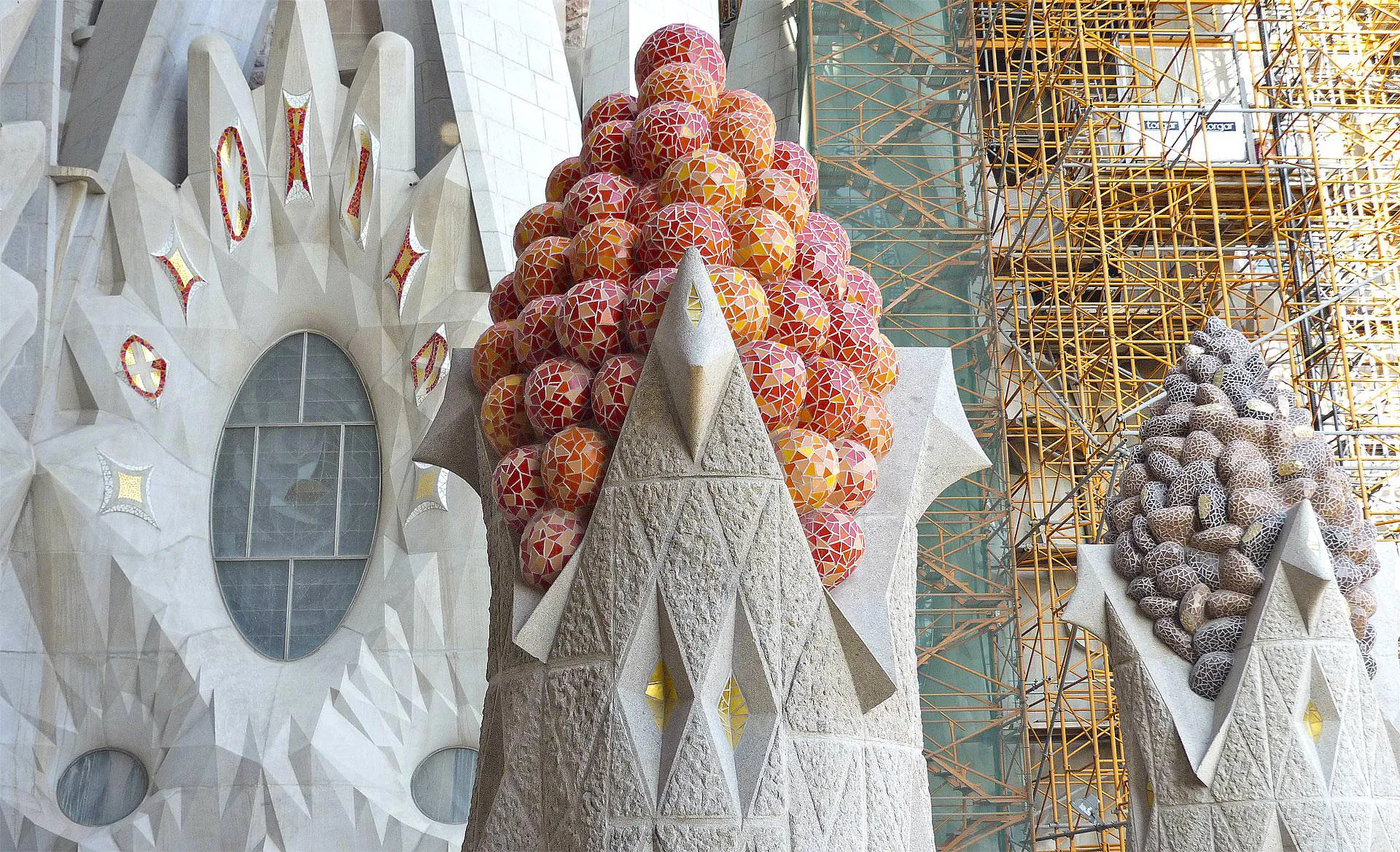
From the squares around the basilica, look up: many pinnacles end in bright clusters of fruit. Popularly called “fruit baskets,” these crowns translate Gaudí’s love of nature and abundance into color and form.
What they mean
- The fruit evokes harvest, thanksgiving, and Eucharist (grain, grapes, and the plenty of creation).
- Each cluster reads like a small still‑life—apples, pears, grapes—signaling joy and praise at the top of the architectural “trees.”
How they’re made
- Crowns use trencadís (broken‑tile mosaic) and stone, chosen for color that holds in Mediterranean sun.
- The technique creates sparkle and weather resistance; irregular facets catch light at many angles.
Where to spot them
- Above the Nativity roofline you’ll find especially exuberant crowns—morning light makes them glow.
- On other pinnacles, look for vivid ceramic clusters that punctuate the skyline.
- Bring binoculars or a short telephoto to read shapes and textures from the squares.
Birds and the skyline
You’ll often see seabirds and city birds tracing thermals around the towers. Their presence, together with the fruit crowns, adds a living layer to the skyline—nature literally meeting the architecture.
Photography tips
- Morning: shoot from Plaça de Gaudí (east) for crisp detail and reflections in the pond.
- Late afternoon: western squares yield warm glints on mosaic facets.
- Use a polarizer sparingly to keep color punch without dulling the sparkle.
Care and conservation
- Regular inspection addresses grout, tile adhesion, and drainage at the pinnacle caps.
- Replacement follows original color logic; weathering is monitored to keep crowns legible without over‑cleaning.
These “fruit baskets” crown the basilica’s garden of stone, reminding visitors that creation’s gifts return upward in gratitude.
About the Author

Architecture Guide
I created this guide to make your Sagrada Família visit simple, insightful, and stress‑free.
Tags
Comments (0)
Loading comments...