Visiting timetable09:00 AM – 08:00 PM
|Sunday, September 20, 2026C/ de Mallorca, 401, 08013 Barcelona, Spain
Back to architecture
symbolism
Sagrada Família Architecture and Symbolism - Full Guide
Understand the Sagrada Família’s symbolic program and structural logic: facades, towers, and the forest interior.
11/3/2025
18 min read
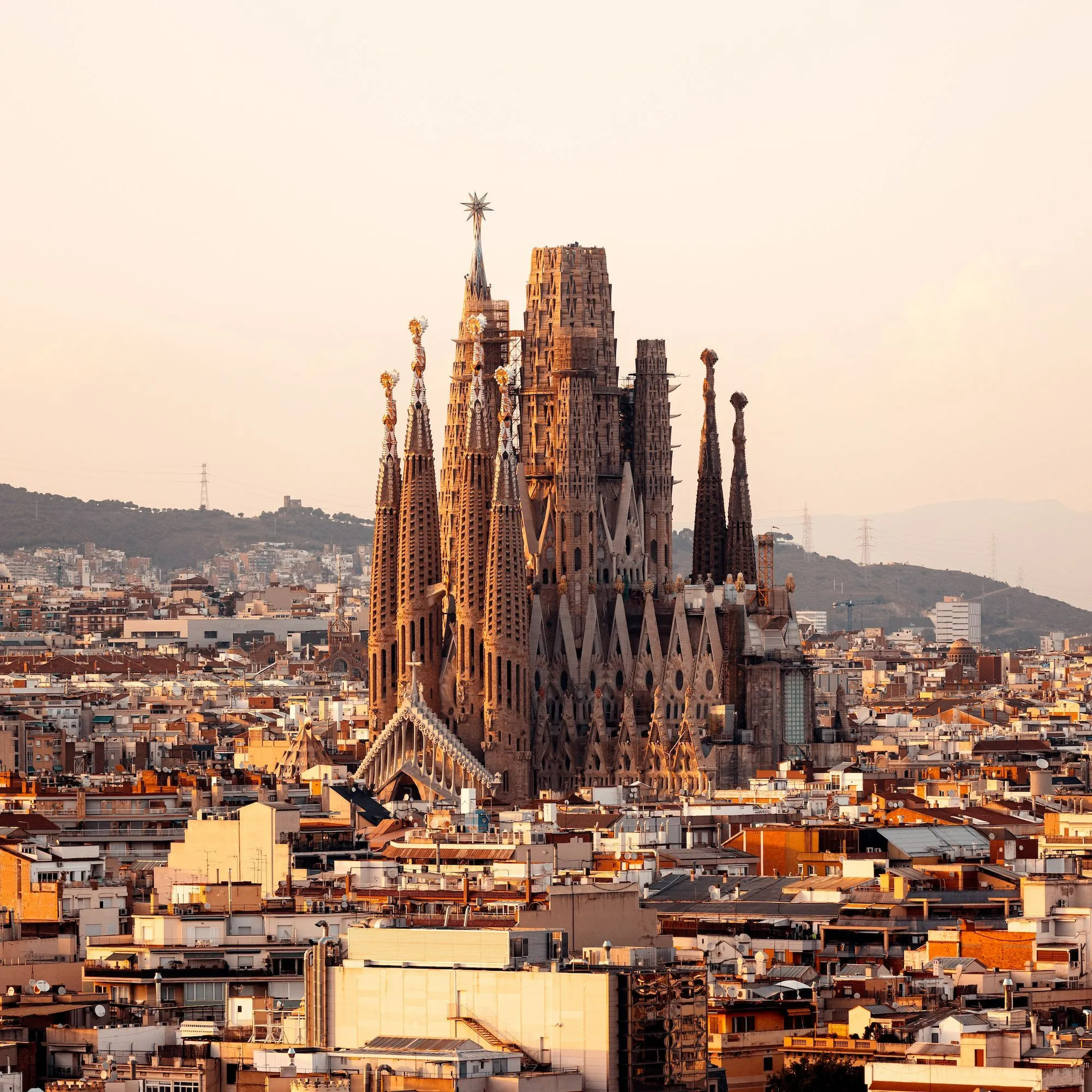
The Sagrada Família is scripture in stone. Gaudí designed a legible narrative where form equals meaning.
Structural Language: Geometry as Theology
- Columns lean and bifurcate, using ruled surfaces for strength and grace.
- Vaults are hyperbolic; light wells are hyperboloids that bathe the nave in color.
- Spiral stairs suggest the growth spirals of shells and plants.
The building is not decorated nature — it is constructed nature.
Materials and Making
- Historic Montjuïc stone, reinforced concrete cores, prefabricated stone shells, ceramics, and metal.
- Carved stone finished by hand preserves tactile clarity in an era of machines.
- Joints and perforations are part of acoustics, weight reduction, and airflow.
The Narrative Triptych: Three Façades
- Nativity (East) — creation, joy, and abundance.
- Passion (West) — suffering, silence, and shadow.
- Glory (South) — resurrection, journey, and judgment.
Each façade uses a distinct sculptural language to teach a different mystery.
Towers and Their Hierarchy
- 18 towers: 12 Apostles (per façade), 4 Evangelists, Mary, and Jesus (tallest).
- Evangelists’ towers carry their symbols; the Jesus tower will culminate in a cross visible across Barcelona.
- The perforated geometry reduces drag and tunes the bells.
How to Read the Building in 45 Minutes
- Stand at the Nativity and scan bottom → top: life flows upward into praise.
- Cross to the Passion and let the shadows narrate the Stations.
- Enter the nave; look up at the branching columns until the vaults “disappear.”
- Sit and watch stained glass change the room minute by minute.
Glossary (Fast)
- Hyperboloid: a doubly-curved surface letting light in without glare.
- Ruled surface: a surface generated by a straight line moving along curves.
- Catenary: the natural curve of a hanging chain; inverted, it makes a pure compression arch.
About the Author

Architectural Analyst
I created this guide to make your Sagrada Família visit simple, insightful, and stress‑free.
Tags
Sagrada Família
Symbolism
Architecture
Gaudí
Barcelona
Comments (0)
Leave a Comment
Loading comments...