खुलने का समय09:00 AM – 08:00 PM
|गुरुवार, सितंबर 10, 2026C/ de Mallorca, 401, 08013 Barcelona, Spain
पर वापस जाएँ history
overview
Sagrada Família History and Vision - Gaudí’s Living Cathedral
Explore the origins, milestones, and spiritual vision shaping Barcelona’s Sagrada Família from 1882 to today.
11/3/2025
20 min read
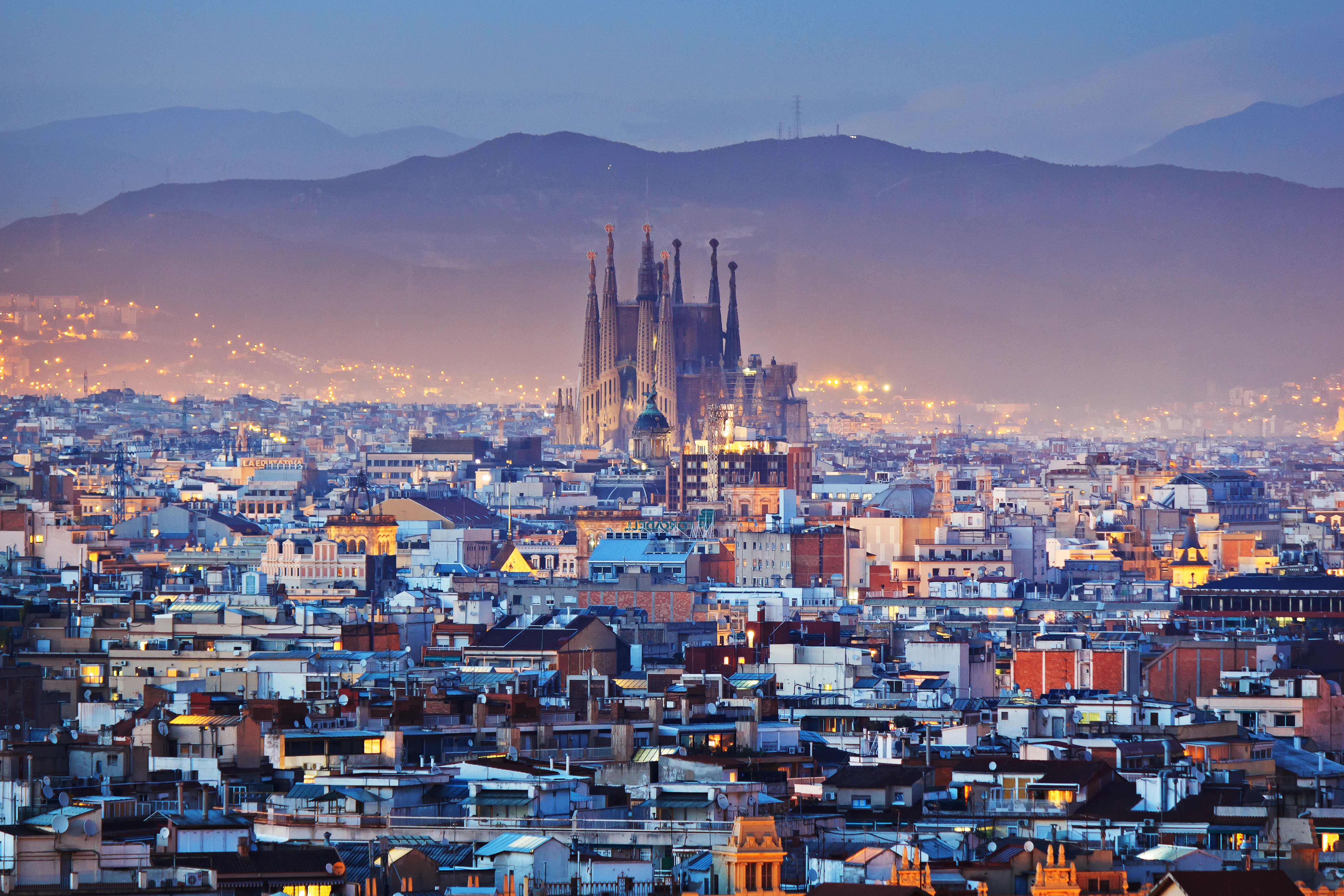
The Temple Expiatori de la Sagrada Família is a work in progress by design — a cathedral that grows like a living organism. Begun in 1882 under architect Francisco de Paula del Villar, it was radically reimagined by Antoni Gaudí from 1883 until his death in 1926.
- A lay association envisioned a church funded entirely by private donations — no public money.
- This model shaped everything: pace, priorities, and an ethos of service and humility.
- Gaudí aligned the financial model with a spiritual one: the building would rise by many hands, across generations.
Gaudí Takes Over (1883–1926)
- Inherits a neo‑Gothic plan, then pivots to a language of nature‑driven geometry.
- Develops a “total work of art”: structure, light, furniture, and even liturgical choreography.
- Experiments with inverted chain models to find forms that work with gravity, not against it.
“Originality consists of returning to the origin.” — Antoni Gaudí
Methods, Models, and the Workshop
- Design advanced through large plaster models (some at 1:10 scale).
- Craftspeople tested geometry as physical mock‑ups — a feedback loop between drawing, model, and stone.
- After 1936, shattered model fragments became a puzzle; later teams reassembled and scanned them to retrieve Gaudí’s intent.
Fires, Pauses, and Recoveries (1930s–1980s)
- 1936: Workshop burned during the Civil War; archives and models partially lost.
- Postwar work focused on stabilizing the crypt, rebuilding knowledge, and fundraising anew.
- The project’s resilience forged a culture of documentation still visible today.
From Consecration to Today (2010–Now)
- 2010: Consecrated as a minor basilica; nave opened for liturgy.
- 2010s–2020s: Evangelists’ and Mary’s tower completed; works accelerate on the Glory Façade and the central Jesus tower.
- Contemporary teams blend digital models with hand carving, keeping craft at the core.
Timeline at a Glance
- 1882: Groundbreaking (del Villar).
- 1883–1926: Gaudí era; Nativity Façade and crypt, major models.
- 1936: Fire; models damaged.
- 1950s–2000s: Passion Façade, nave vaults, transepts.
- 2010: Consecration.
- 2020s: Mary + Evangelists towers; progress on Glory + Jesus tower.
What Makes It Unique
- Structure and ornament are one system.
- Light is didactic: mornings preach birth, evenings reflect sacrifice.
- It is a collaboration across centuries, guided by models, fragments, and faith.
Visiting Pointers (2–3 Hours)
- Start outside: Nativity (east) → Passion (west) to feel the emotional arc.
- Enter the nave when the sun suits your preference: cool morning vs warm evening.
- Finish in the museum to decode the geometry and models you just saw.
FAQ
- Is it finished? Not yet; the Jesus tower remains the final summit.
- Why so long? Funding model + complexity + fidelity to craft.
- Is it really Gaudí’s work now? Teams build from his models, geometry, and program, using today’s tools.
लेखक के बारे में

Architecture Historian
मैंने यह गाइड इसलिए बनाया कि आपकी यात्रा सरल, स्पष्ट और तनाव-मुक्त हो।
Tags
Sagrada Família
Barcelona
Gaudí
Modernisme
History
Comments (0)
Leave a Comment
Loading comments...